Mahjong vs. Mahjong Solitaire: Key Differences Explained
Many beginners confuse traditional Mahjong with the digital “Solitaire” version. This guide explores the fundamental differences in gameplay, social connection, and tactile experience, helping you choose the right path for your next game night.
The Great Divide: Strategy vs. Solitude
If you search for “Mahjong” on any app store, you will likely find thousands of tile-matching puzzles. However, the game played for centuries in Asia and modern American homes is a vastly different beast.While they share the same beautiful tiles, the experience is worlds apart.
1. Social Strategy vs. Solo Focus
Traditional and American Mahjong is a four-player social game. It is often compared to Rummy but with significantly more depth. It requires strategy, memory, and the ability to read your opponents. Every draw and discard is a calculated move toward building a winning hand.
In contrast, Mahjong Solitaire is a single-player puzzle. The goal is simple: remove matching pairs from a stacked formation. There is no opponent, no betting, and no complex “Charleston”passing phase. It is a game of pattern recognition, not human interaction.
2.The Tactile Experience: Physical Tiles vs. Digital Pixels
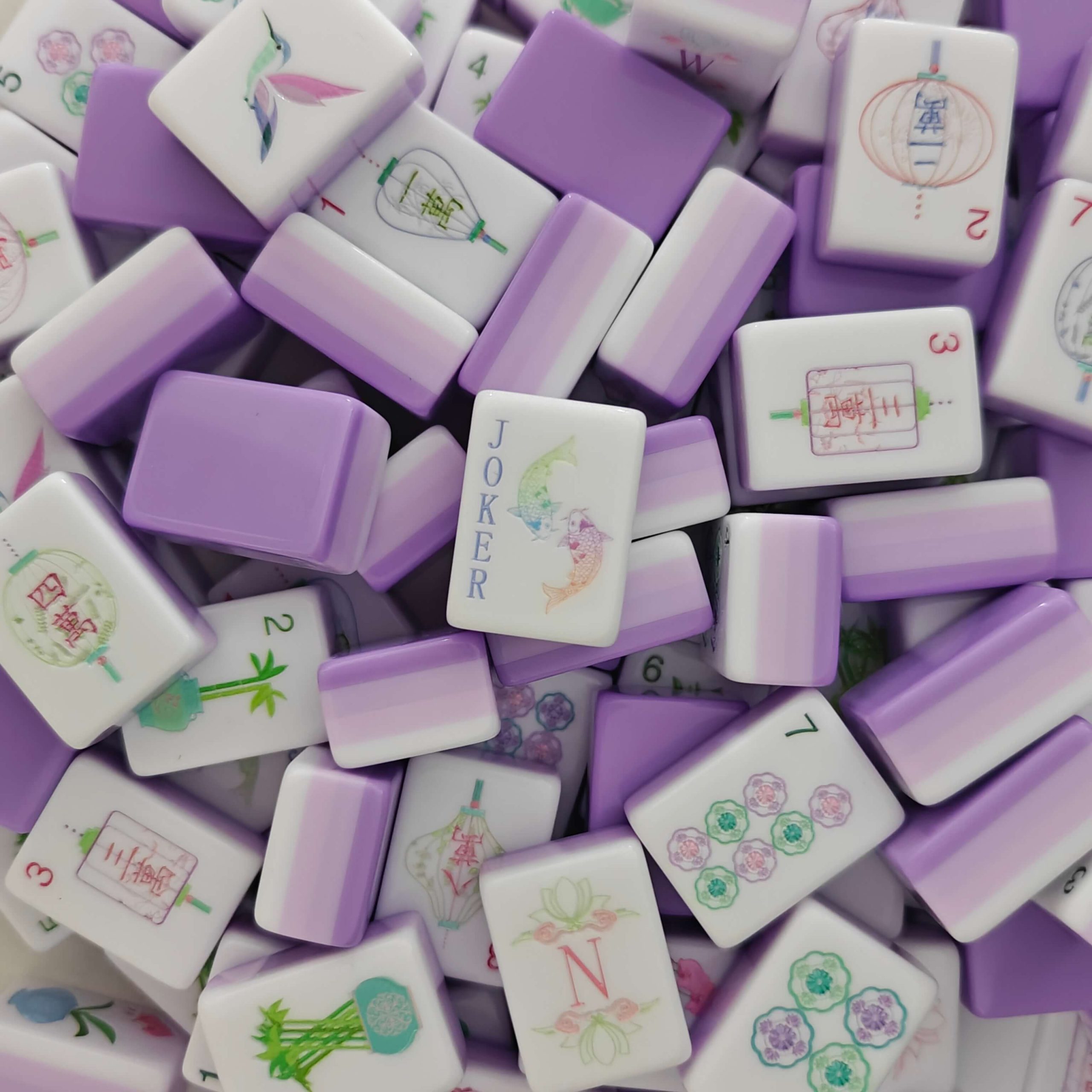
At OMHJGO, we believe the soul of the game lies in the physical ritual. There is a sensory satisfaction in the “clack” of premium tiles that a glass screen simply cannot provide.
• Weighted Depth – Our Dragon Collection and Vibrant Peony sets feature 4-layer acrylic tiles with a satisfying heft and precision‑etched motifs. Every tile feels substantial in your hand, and the engraved details stay sharp.
• Solid Luxury-Digital games use flat,, lifeless icons. Physical Mahjong tiles offer a rich, opaque surface that showcases intricate carvings and vibrant colors. You can run your fingers over the engravings – something no screen can replicate.
3. Quick Rules Comparison
| Feature | Traditional /American Mahjong | Mahjong Solitaire |
| Player Count | 4 Players (Social) | 1 Player (Solo) |
| Objective | Build a specific 14-tile hand | Clear the board by matching pairs |
| Skillset | Strategy, Risk Management, Social Cues | Pattern Recognition, Speed |
| Game Pieces | Full 152-160 Tile Sets | Typically 144 Digital Icons |
Why Physical Mahjong Wins for Social Gatherings
While Solitaire is a great way to kill five minutes on a commute, it doesn’t create memories. Traditional Mahjong is the centerpiece of modern social gatherings. It’s about the Social Hour—the snacks, the laughter, and the pride of displaying a designer art piece on your table.
When you play with an OMHJGO set, you aren’t just playing a game; you are “Playing the Art.”
Conclusion: If you want to relax alone, play Solitaire. But if you want to touch the soul of this ancient tradition and connect with friends, it’s time to invest in a real set of tiles.