
When to Stop Passing Tiles: American Mahjong Charleston Tile Passing & US Table Opening Tactics
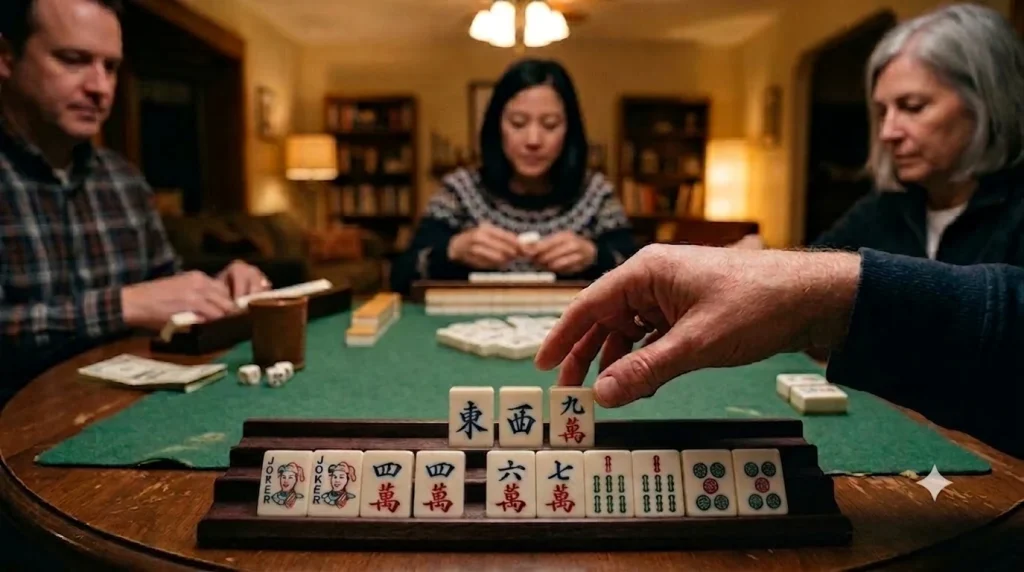
New and experienced players alike struggle with Charleston tile passing, a unique opening mechanic exclusive to American Mahjong. The most frequent question across home gatherings and online lobbies is simply when to stop passing tiles. Many casual players follow basic steps without solid mahjong opening tactics, while confusion around flexible US mahjong table rules often leads to disagreements mid-game.
This guide breaks down mandatory and optional Charleston processes, shares actionable opening strategies, and clarifies standard and house table rules for all player groups. Whether you play solo online, host family game nights, or join local mahjong clubs, you will find clear, actionable rules to avoid common missteps. You can cross-check official standards via the Official National Mahjong League Charleston rule page.
What Is Charleston Tile Passing in American Mahjong?
Charleston tile passing is the signature pre-game tile exchange that sets American Mahjong apart from other mahjong variants. Before any tile draw or discard takes place, every player must complete three fixed rounds of tile transfer known as the first, mandatory Charleston.
The standard fixed passing order never changes for the required round: pass three tiles left, three tiles across the table, then three tiles to the right. This equal exchange creates a fair starting foundation for all four players, letting everyone rearrange their hand to chase potential winning combinations.
This mandatory cycle cannot be skipped, shortened, or paused for any player’s personal hand preference—this core rule lays the groundwork for understanding exactly when to stop passing tiles later in the game flow.
When to Stop Passing Tiles: Mandatory vs Optional Charleston
This section directly answers the core search question: when to stop passing tiles during Charleston tile passing. There are two distinct stages with completely different stopping rules.
1. Mandatory First Charleston: No Early Stopping Allowed
The initial three-step passing sequence is non-negotiable. Even if you draw a powerful hand with multiple pairs and clear tile direction, you must finish all three passes. Stopping halfway breaks fair play, as every table participant gets the same chance to swap unwanted tiles. There is zero room for custom adjustments here under official standards.
2. Optional Second Charleston: Players May End the Exchange Early
Once the first Charleston finishes, the group can choose to run a reversed second optional Charleston: pass three right, three across, three left. This stage is voluntary. The universal standard rule for US mahjong table rules states that if just one player declines to continue the second Charleston, the entire tile passing process ends immediately, and gameplay begins.
Choosing to halt the optional round is a core piece of solid mahjong opening tactics, covered fully in the next chapter.
Practical Mahjong Opening Tactics for Charleston Stage
Mastering smart mahjong opening tactics separates casual players from consistent winners during Charleston tile passing. The biggest strategic choice you will face is deciding whether to agree to the second optional Charleston or push to end tile exchange early. If you want deeper competitive advice, read our article covering proven American Mahjong winning strategies.
When You Should Stop Passing Early
- Your hand has a clear target pattern with multiple matching pairs and supporting tiles; swapping risks giving critical pieces to competitors.
- You hold rare high-value tiles that other players at the table are likely pursuing.
- You have already balanced your hand during the mandatory Charleston and do not want unpredictable reshuffling to ruin your setup.
When You Should Accept the Second Charleston
- Your starting hand is scattered, with no clear tile set or winning direction.
- You hold many low-value duplicate tiles that you can safely pass without losing key pieces.
- You are familiar with your opponents’ playing styles and can predict which tiles they are chasing.
All these small opening decisions build consistent long-term performance in American Mahjong.
Standard & Custom US Mahjong Table Rules for Charleston
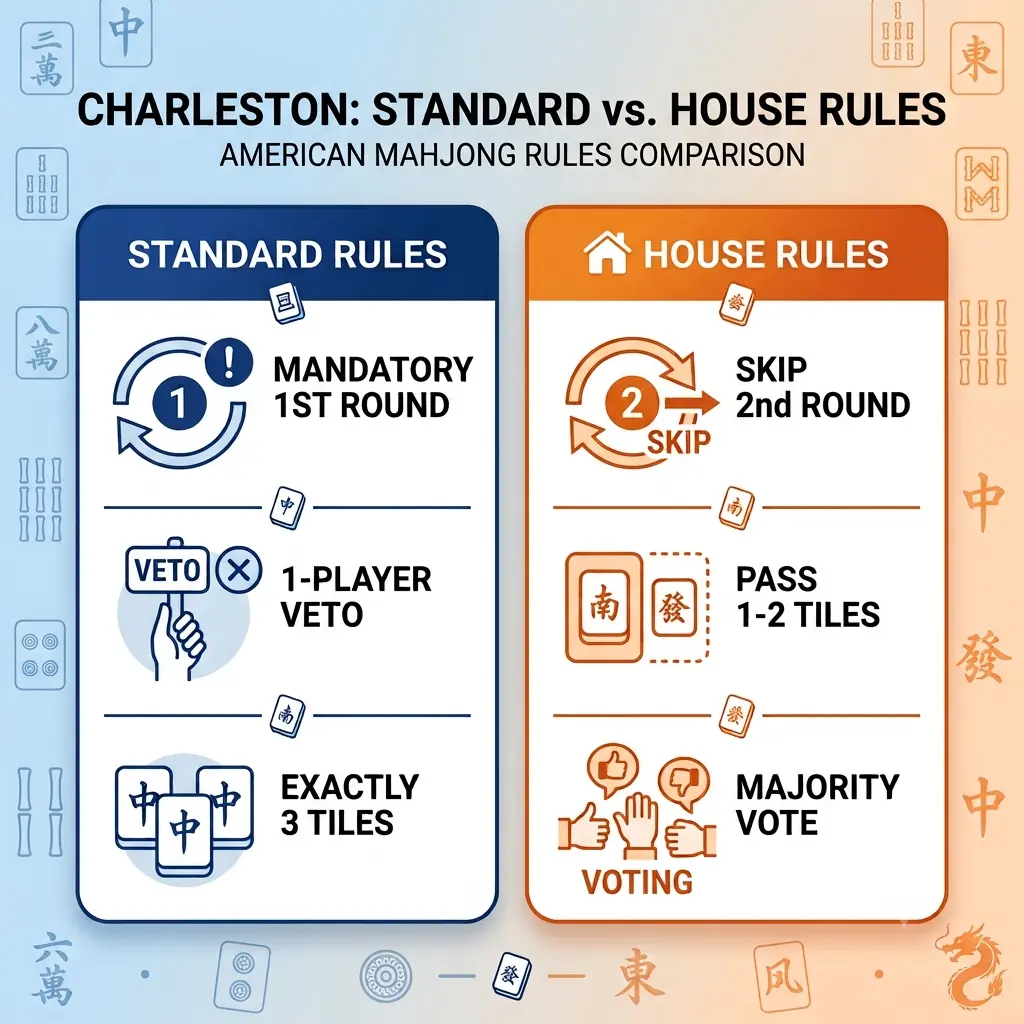
Official tournament US mahjong table rules lock in the mandatory three-pass Charleston and the “one player veto ends optional passing” rule. However, casual home tables frequently adopt flexible house rules that modify the Charleston flow for relaxed play. For full official specifications, browse our guide of complete 2026 American Mahjong official rules.
Standard Tournament Rules
- Mandatory Charleston (left > across > right) is non-negotiable for all players.
- Second optional Charleston requires unanimous consent; any single player opting out stops all tile passing.
- Each transfer must consist of exactly three tiles with no exceptions.
Common Custom House Rules for Casual Games
- Skip the entire second Charleston entirely to speed up game rounds.
- Allow players to pass fewer than three tiles for low-stakes family play.
- Require a majority vote rather than single-player veto to end the optional Charleston.
Before starting any home game, always align the group on these custom adjustments to avoid disputes over Charleston tile passing and when to stop passing tiles.
Common Charleston Tile Passing Mistakes
New and intermediate players repeatedly make avoidable errors tied to our five core keywords:
- Trying to stop passing tiles during the mandatory Charleston stage, misunderstanding basic American Mahjong structure.
- Agreeing to a second Charleston without applying thoughtful mahjong opening tactics, throwing away strong hands unnecessarily.
- Ignoring flexible US mahjong table rules and arguing over house rule variations mid-game.
- Passing high-value critical tiles due to poor judgment during Charleston tile passing.
All these mistakes are easy to avoid once you separate mandatory and optional passing rules and plan your tile swaps in advance.
FAQ Section
Q1: What is Charleston tile passing in American Mahjong?
Charleston tile passing is the pre-game tile exchange unique to American Mahjong, split into a mandatory first round and an optional second reversed round. This article covers full step-by-step passing orders and stopping guidelines.
Q2: When exactly can players stop passing tiles?
You cannot stop during the mandatory Charleston. You may only halt tile passing after finishing the first Charleston if any player refuses to join the second optional round.
Q3: What effective mahjong opening tactics reduce tile waste during exchange?
Jump back to our dedicated section about mahjong opening tactics. Focus on discarding duplicate, low-value tiles, and assess your hand’s potential before agreeing to extra tile swaps.
Q4: Can players adjust US mahjong table rules for casual family Charleston games?
Absolutely. Casual tables often set custom house rules, and many families pick out premium acrylic mahjong sets for home table games to make Charleston tile passing smoother.
To recap all key takeaways for American Mahjong: Charleston tile passing follows a fixed mandatory sequence that cannot be cut short, and the critical rule for when to stop passing tiles applies only to the voluntary second round. Using targeted mahjong opening tactics lets you decide if extra tile swaps benefit your hand, while learning standard and custom US mahjong table rules keeps home and tournament games fair and conflict-free. If you’re new to this variant, check our post with beginner-friendly American Mahjong FAQs to fill in knowledge gaps.