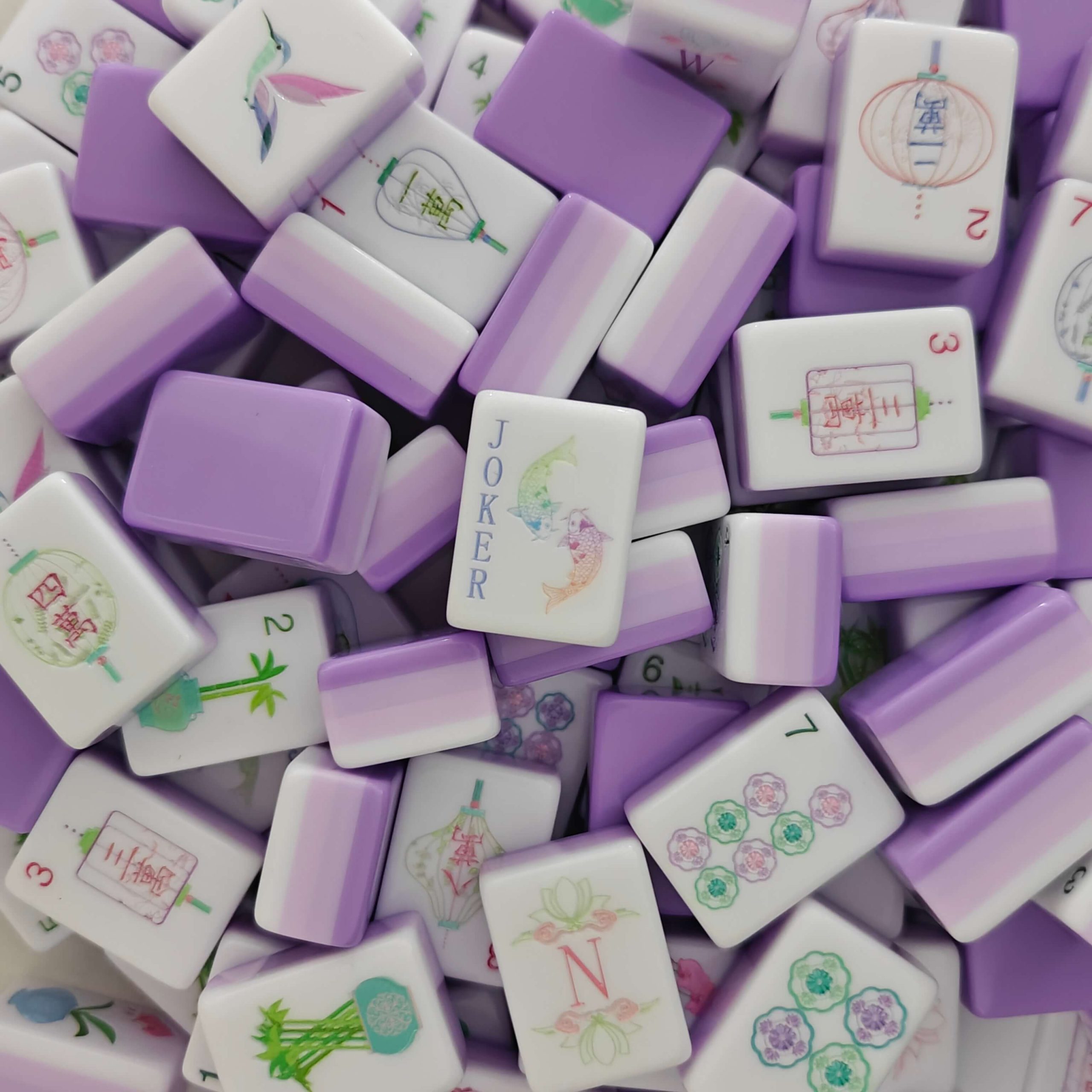
American Mahjong FAQs for Beginners: 15 Common Questions Answered
American Mahjong FAQs for Beginners: 15 Common Questions Answered
Everything new players ask about NMJL rules, jokers, the Charleston, and more
Introduction
If you’re searching for clear answers to your American Mahjong FAQs for Beginners, you’ve probably discovered that this game isn’t as simple as watching a quick tutorial. Between the annual NMJL Hand Card, the unique joker rules, and the Charleston tile exchange, American Mahjong has its own traditions that generate plenty of questions from first-time players.
The good news? You don’t need to memorise every detail before your first game. Once you understand the answers to a few key questions — like how to read the NMJL card, what jokers can and cannot do, and how the Charleston works — the rest becomes much easier.
This FAQ guide covers the 15 most common questions beginners ask about American Mahjong. Whether you’re preparing for your first game night or shopping for your first set, these answers will help you sit down at the table with confidence.
Table of Contents
- Understanding the Basics
- The NMJL Hand Card
- Joker Rules Explained
- How the Charleston Works
- Winning, Scoring & Common Questions
- Quick Tips for Beginners
Understanding the Basics
Before we get into the details, let’s answer the most fundamental questions about what American Mahjong actually is and what you need to play.
Is American Mahjong the same as Chinese or Japanese Mahjong?
The short answer is no.
While they share the same origins, American Mahjong has evolved into its own distinct version. It follows the rules of the National Mah Jongg League (NMJL) and uses a yearly Hand Card that lists every legal winning hand.
Unlike many Chinese or Japanese styles, American Mahjong also includes joker tiles and starts with the Charleston — a unique tile-passing phase before the first turn.
If you’ve played other Mahjong variants before, think of American Mahjong as learning a familiar game with a completely different rulebook. Learn more about the differences between Chinese and American Mahjong →
Beginner Tip: Knowing another Mahjong style can help you recognise the tiles, but don’t assume the rules are the same.
How many players do you need to play American Mahjong?
A standard game is played with four players — that’s the format used by the NMJL, most Mahjong clubs, and organised tournaments.
Some home groups enjoy playing with three players using modified rules, but these are informal variations rather than the official game. If your goal is to learn American Mahjong correctly, it’s worth practising with four players from the beginning.
What do you need to play American Mahjong?
Besides four players, you’ll need a complete American Mahjong set. A standard set typically includes:
- Mahjong tiles, including jokers and blank replacement tiles
- Four racks with pushers
- Dice
- A wind indicator
- The current NMJL Hand Card
Having the right equipment makes learning much easier and ensures you’re playing by the same rules used in clubs and tournaments.
Understanding the NMJL Hand Card
If American Mahjong has one “rulebook,” it’s the NMJL Hand Card. Every official winning hand is printed on this card, which is updated every year. Learning how it works is one of the biggest steps toward becoming a confident player.
Why do I need a new NMJL Hand Card every year?
The NMJL releases a new Hand Card annually, introducing fresh winning combinations while retiring older ones.
In official games and most Mahjong clubs, only the current year’s card is valid. Older editions may still be useful for casual practice, but they aren’t used in tournament play.
Before starting a game, it’s always a good idea to make sure everyone at the table is using the same edition.
What do the letters “C” and “X” mean?
These letters tell you whether a hand must stay hidden or can be exposed during play.
C = Concealed — A concealed hand must remain hidden until you declare Mahjong. Exposing tiles during the game means that hand is no longer valid.
X = Exposed — An exposed hand allows you to call and display tiles as permitted by the rules. Because they offer more flexibility, exposed hands are often a good choice for beginners.
Learning the difference between concealed and exposed hands early can save you from a common beginner mistake.
Can I change my target hand during the game?
Yes — but only while your options remain open.
Many experienced players adjust their plans as they draw new tiles. However, once you’ve exposed tiles for a particular hand, your choices become much more limited.
For that reason, beginners often benefit from staying flexible during the early stages of the game instead of committing to a single hand too quickly.
Quick Tip: Before exposing tiles, check whether they fit more than one possible hand on the NMJL Card. Keeping your options open usually leads to better results.
Joker Rules Explained
Jokers are one of the biggest features that set American Mahjong apart from other Mahjong variations. They can make completing a hand much easier — but only if you understand when they can and can’t be used. Learning these rules early will help you avoid some of the most common beginner mistakes.
How can jokers be used in American Mahjong?
Jokers act as wild tiles, but they aren’t a free replacement for everything.
In most hands, a joker can substitute for a missing tile in a pung, kong, quint, or sextet. This flexibility makes them one of the most valuable tiles in the game.
However, every hand on the NMJL Card has its own requirements, so it’s important to check whether jokers are allowed before relying on them.
Beginner Tip: Don’t build your strategy around drawing jokers. A strong hand should still have multiple paths to completion.
Can a joker complete the final pair?
No.
One of the first rules every beginner should learn is that a joker cannot be used as the final pair in a winning hand.
Your pair must always consist of two matching natural tiles unless the NMJL Hand Card specifically states otherwise.
Many new players lose potential winning hands because they overlook this simple rule, so it’s worth remembering from the start.
What is a Joker Exchange?
A Joker Exchange allows a player to replace an exposed joker with the natural tile it represents.
For example, if another player has exposed three 5 Bams and one joker, and you have the fourth 5 Bam, you may exchange your tile for the joker.
This rule keeps jokers moving around the table and adds another layer of strategy to the game. Once you become familiar with it, you’ll start spotting exchange opportunities throughout the game.
Common Question: Does this apply to concealed jokers? No — a Joker Exchange only applies to exposed melds. Jokers in a concealed hand cannot be exchanged.
How the Charleston Works
If there’s one part of American Mahjong that surprises new players the most, it’s the Charleston. Instead of jumping straight into the game, players first exchange tiles to improve their starting hands. It may seem unusual at first, but it’s one of the traditions that makes American Mahjong unique.
Is the Charleston required?
In most games, yes.
The Charleston is a standard part of American Mahjong and is used in official NMJL play as well as many local clubs.
Some casual home games choose to skip it or use simplified variations, but if you’re learning the official rules, it’s best to become comfortable with the traditional procedure.
How does the Charleston work?
The Charleston begins before the first turn and consists of three required tile exchanges.
Players pass:
- Three tiles to the player on the right
- Three tiles to the player on the left
- Three tiles to the player across the table
Some groups also include an optional second Charleston or a blind pass, depending on house rules.
Rather than trying to build one perfect hand, most experienced players use the Charleston to remove tiles that don’t fit several possible hands.
Can I look at the tiles I receive before choosing which ones to pass?
No.
During each pass, every player chooses their outgoing tiles before looking at the tiles they’ve received.
This keeps the exchange fair and prevents players from changing their decisions after seeing new information.
Once you’ve completed a few games, this process becomes surprisingly quick and natural.
Quick Tip: During the Charleston, focus on eliminating “problem tiles” instead of chasing a single hand too early. Staying flexible usually gives you more opportunities later in the game.
Winning, Scoring & Common Questions
Winning in American Mahjong isn’t just about completing a hand — it’s also about understanding how scoring works and avoiding situations that can prevent you from declaring Mahjong. Here are a few questions that often come up once players become familiar with the basic rules.
How does scoring work in American Mahjong?
Scoring is based on the value printed on the current NMJL Hand Card, but who pays depends on how the game is won.
- Win on a discard: The player who discarded your winning tile pays the value of the hand.
- Self-drawn win: If you draw your own winning tile, each of the other three players pays according to your group’s scoring rules.
Some clubs and home games use different chip or point systems, so it’s always a good idea to confirm the scoring method before you begin.
What happens if no one wins before the wall runs out?
If all playable tiles have been drawn and no one has declared Mahjong, the game ends in a wall game (also called a draw).
No one wins the round, and play simply moves on to the next game.
Wall games are more common than many beginners expect, especially when several players are building difficult hands or playing defensively.
What is a dead hand?
A dead hand is a hand that can no longer become a legal winning hand during the current round.
This can happen if you:
- Have the wrong number of tiles.
- Expose tiles that no longer match a legal hand.
- Misuse jokers.
- Create exposed combinations that don’t fit any pattern on the NMJL Hand Card.
Once a hand is dead, you continue playing until the round ends, but you can no longer declare Mahjong.
Common Question: Can a dead hand be revived? No — once dead, it stays dead for the rest of the round. The best you can do is play defensively.
Quick Tips for New Players
If you’re playing American Mahjong for the first time, keep these simple tips in mind:
- Stay flexible during the first several turns.
- Check the NMJL Hand Card often — everyone does.
- Count your tiles whenever you’re unsure.
- Learn the joker rules before relying on them.
- Don’t be discouraged by a dead hand; it’s a common part of learning.
- The more you play, the more natural the rules will feel.
Every experienced American Mahjong player started exactly where you are now. With each game, you’ll recognise more patterns, make better decisions, and enjoy the strategy behind the game even more.
Ready to Start Playing?
American Mahjong may seem complicated at first, but once you understand a few core concepts, it quickly becomes one of the most rewarding and social Mahjong variations to play. Rather than trying to memorize every rule, focus on learning one step at a time — mastering the NMJL Hand Card, how jokers work, and the Charleston will give you a strong foundation for every game. A complete set with clear markings and all necessary accessories makes learning much easier; if you’re looking for one for game nights or gifts, explore our beautifully designed collection for both beginners and experienced players. We hope this guide has answered your biggest questions and helped you feel more confident about your next game. Happy playing!